What you get back
- An English transcript next to the original Portuguese transcript, plus a timestamped version.
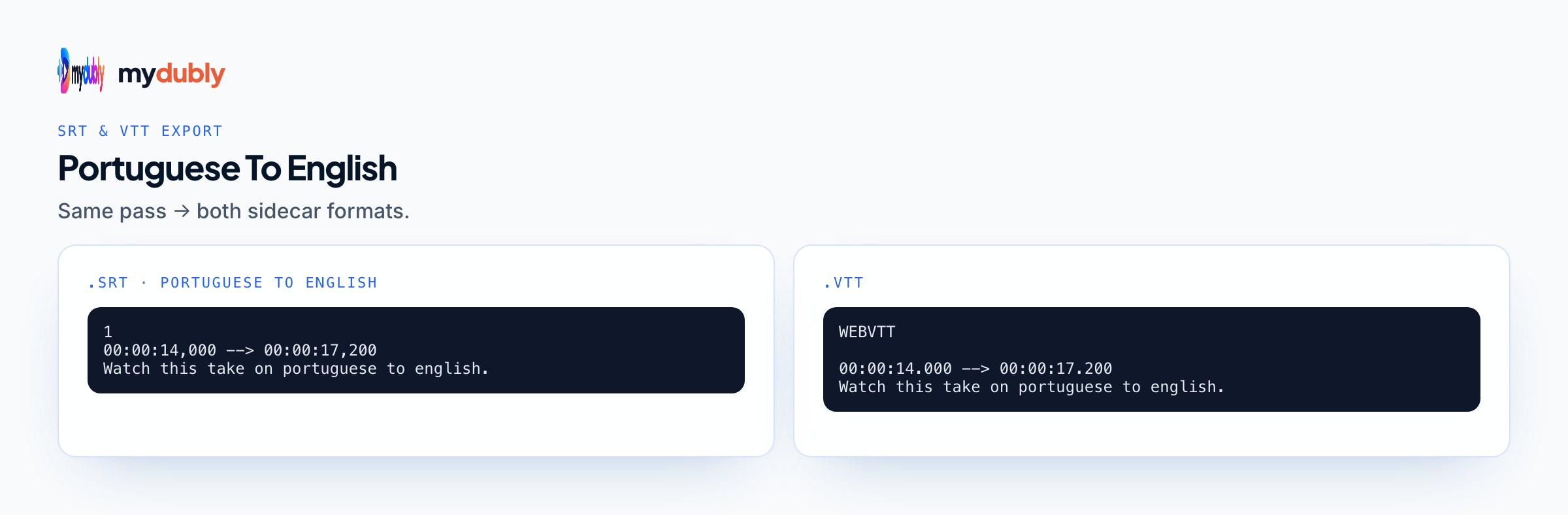
- English subtitles as SRT and VTT files.
- With Full translation output on: an English voice track in which each person (up to 8) speaks in a copy of their own voice, the translated audio as M4A, and an MP4 that keeps your original picture, music and effects.
- Portuguese is detected automatically. The tool above is already set to English, so you only drop in the file.
Portuguese to English at a glance
Portuguese to English shortens text. Brazilian and European Portuguese both work as sources; fast European Portuguese may need more transcript corrections.
Brazilian and European Portuguese both transcribe well. Brazilian creators use this direction to reach English-speaking audiences, and companies use it to review Brazilian customer interviews and sales calls.
Portuguese typically runs longer than English, so the English voice fits comfortably inside the original timing.
Watch for false friends that machine translation sometimes passes through: 'pretender' means to intend, 'puxar' means to pull, and 'atualmente' means currently. Brazilian business speech also borrows many English words ('deadline', 'feedback'), which carry through unchanged.
Portuguese uses decimal commas and dots for thousands (1.500,50), the opposite of English. The translation normally converts these, but check figures in financial content against the Portuguese transcript.
Translating Portuguese video to English from Brazil, Portugal and Africa
You don't tell the tool which Portuguese the speaker uses. Brazilian, European and African Portuguese are all handled as Portuguese; the Portuguese (Brazil) and Portuguese (Portugal) options only matter when Portuguese is the language you translate into. What the source does change is what you should check in the English. A São Paulo sales call, a Lisbon board meeting and a radio interview from Luanda each bring their own vocabulary, forms of address and number habits, and the sections below go through the ones that most often need a second look. The article on translating video for regional audiences looks at the same variants from the other side, when Portuguese is the target.
Você, tu, o senhor and the third-person trap
In Brazil, você is the everyday "you", and tu is common in parts of the south and northeast, often with a third-person verb ("tu vai"). In Portugal, tu is for friends and family, and calling a stranger você can sound blunt, so speakers use o senhor, a senhora, a title, or simply the person's name with a third-person verb. English collapses all of this into "you", which is usually harmless.
The name habit is the one to watch. "A Ana pode enviar-me o ficheiro?" means "Ana, can you send me the file?", but a literal translation reads "Can Ana send me the file?", as if Ana were someone else in the room. In recorded meetings from Portugal, search the English transcript for questions that mention a name and check who is actually being addressed.
Doutor, Engenheiro and long family names
Brazilians call lawyers and physicians doutor whether or not they hold a doctorate, and use it as a courtesy for people in authority. In Portugal, Dr. and Dra. go before the name of anyone with a university degree, and engineers are addressed as Engenheiro. An English viewer reads "Dr." as a medical doctor or a PhD, so decide whether to keep the title, swap it for Mr or Ms, or drop it, and apply the same rule across a series.
Full names are long and often carry two or more surnames ("Maria Fernanda Costa Ribeiro"). Formal writing usually uses the last surname, while speech uses a first name or a nickname, so one person can appear three ways in a single interview. Make the English consistent, and keep the accents in names such as João, Conceição and Gonçalves unless the person spells their name without them. The guide to translating names and technical terms shows how to build a name list before a long project.
Bilhão, bilião and other large numbers
Brazil and Portugal count large numbers differently. A Brazilian "um bilhão" is a thousand million, the same as an English billion. Portugal uses the long scale: a thousand million is "mil milhões", and "um bilião" is a million million, which is an English trillion. In finance, budget or policy recordings from Portugal, compare every large figure in the English with the Portuguese transcript.
Currency needs a decision too. "R$ 2 mil" may come out as "R$2,000" or as "2,000 reais"; amounts in euros stay in euros. Both countries write dates day first, so 05/06 is 5 June, not May 6; spell the month out in anything you edit by hand.
Né, tipo, a gente and the little words
Spoken Brazilian Portuguese is full of small words that carry tone rather than content: né at the end of a sentence ("right?"), tipo ("like"), então ("so"). Translation usually trims or flattens them, which keeps English subtitles readable. A gente means "we" in everyday speech and can occasionally come out as "people", so it is worth a search in conversational videos. Diminutives soften rather than shrink: "um minutinho" is "just a minute", and "um cafezinho" is a coffee offered as a courtesy, not a small one.
English subtitles from fast speakers
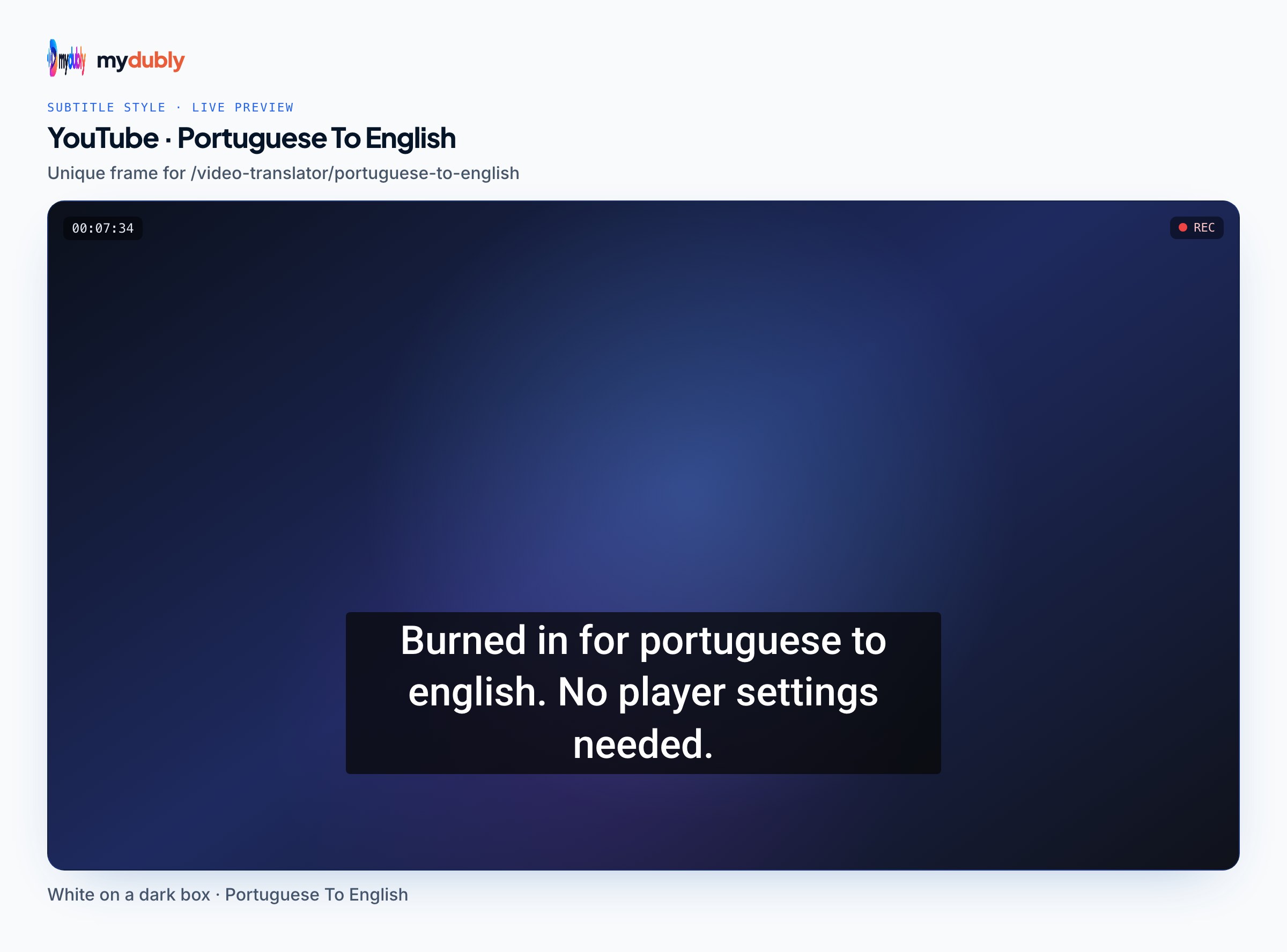
Brazilian podcasts, live streams and vlogs are often delivered fast, with little pause between sentences. English cues tend to be shorter than the Portuguese lines they replace, but a rapid speaker can still produce cues viewers can't finish reading. The subtitle generator gives you the English SRT and VTT; load the SRT with your video in the free subtitle editor, which marks cues that need more than 21 characters per second, and condense those before you publish or burn the subtitles into the picture.
The English dub: copied voices, no lip-sync
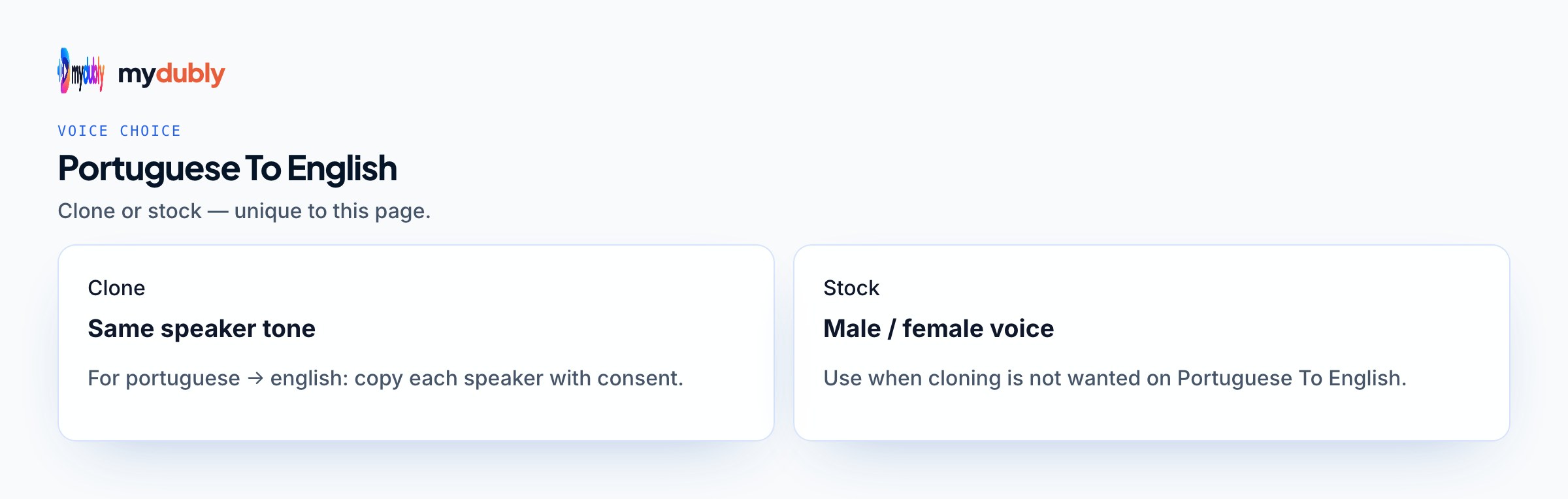
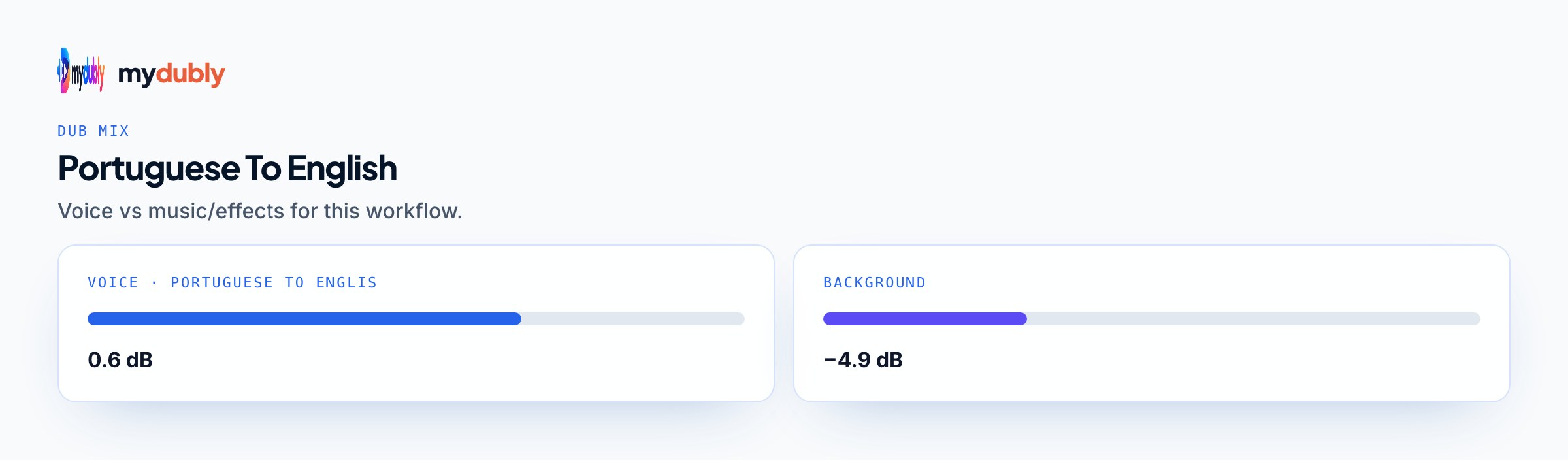
Each person in the video, up to 8, is dubbed in a copy of their own voice, so a Brazilian podcast with three hosts still sounds like three different people in English. There is no voice to pick. There is also no lip-sync: each English sentence is placed where the Portuguese sentence was spoken, but mouths keep the movements of the Portuguese. In screen recordings, product demos and wide shots that is rarely noticed; in close-up interviews, English subtitles under the original voice may serve viewers better. The AI dubbing page explains how the voice copy is made, and AI lip sync explains what lip-sync tools change in the picture and why they produce artefacts.
Who translates Portuguese video into English
- Brazilian creators
- Cooking, fitness, tech and gaming channels launching an English channel or adding English subtitles to existing uploads
- SaaS and e-commerce companies
- Product demos, onboarding and all-hands recordings from Brazilian teams shared with English-speaking colleagues and partners
- Companies in Portugal
- Webinars and internal updates from Lisbon and Porto for international staff and customers
- NGOs and researchers
- Interviews and field recordings from Brazil, Angola, Mozambique and Cape Verde for English-language reports
Podcasts with several hosts are covered step by step in podcast translation.
Limits for Portuguese sources
- Galician and Cape Verdean Creole are not among the 21 translation targets. Galician can still be transcribed (often looking Portuguese/Spanish); Cape Verdean Creole is not a Whisper language, so don't expect a usable transcript from it.
- Speakers from Angola and Mozambique are handled as Portuguese, but words from local languages, such as Kimbundu or Changana, may be misheard or carried through literally.
- When hosts talk over each other, a short line can end up in the wrong copied voice; listen to busy passages before publishing.
- Sung lyrics, from a samba at a party to a jingle in an ad, drop out of the dub together with the dialogue, while instrumental music stays.
- Slides, lower thirds and product labels stay in Portuguese; only speech is translated.
Costed examples
A Brazilian fintech translates a 17-minute Portuguese investor update into English for international shareholders.
Cost: 2,040 credits ($2.04) for the English dub, which includes the subtitles and both transcripts, or 85 credits (8.5¢) for English subtitles and transcripts without a voice.
A Lisbon software company adds English subtitles to a 23-minute Portuguese all-hands recording for new hires in Dublin and Berlin.
Cost: 2,760 credits ($2.76) for the English dub, which includes the subtitles and both transcripts, or 115 credits (11.5¢) for English subtitles and transcripts without a voice.
A cooking creator in Belo Horizonte dubs a 17-minute pão de queijo recipe into English, keeping her own voice for her new English channel.
Cost: 2,040 credits ($2.04) for the English dub, which includes the subtitles and both transcripts, or 85 credits (8.5¢) for English subtitles and transcripts without a voice.
Using the tool on this page
- The spoken language is detected automatically across about 100 languages; you can pin it, or pick one of 21 languages to translate into. Files can be up to 2 hours long.
- Only the audio is sent for processing — the video stays on your device. The finished dub opens in the dub editor, where you can correct words, timing, levels, background and subtitles and re-process only what changed. Its files are deleted 120 minutes after you last use the editor (how files are protected).
- You can download a translated video that keeps your music and effects, the translated audio as M4A, a transcript and subtitles (SRT and VTT). Every output, step and limit is explained on the video dubbing tool page.
More language pairs
Frequently asked questions
Do I have to say whether the speaker is Brazilian or from Portugal?
No. Both are detected as Portuguese automatically. The Brazil and Portugal options only steer translations into Portuguese, not out of it.
Will the English dub match the speakers' lip movements?
No. There is no lip-sync; each English sentence starts where the Portuguese one did, in a copy of the speaker's voice. For close-up interviews, English subtitles under the original audio may suit viewers better.
How should Doutor or Engenheiro appear in English subtitles?
Choose one rule for the whole series. English viewers read Dr. as a physician or a PhD, so many teams use the person's name alone and keep Dr. only for actual doctors.
Is bilião in a recording from Portugal a billion?
No. In European Portuguese, bilião is a million million, an English trillion, while a Brazilian bilhão is a billion. Check large figures in the English against the Portuguese transcript.
Can a Brazilian podcast with several hosts be dubbed into English?
Yes. Each host, up to 8 per file, is dubbed in a copy of their own voice. Overlapping speech can put a short line in the wrong voice, so listen to lively stretches before publishing.
Does it work with Portuguese from Angola or Mozambique?
Yes, it is handled as Portuguese. Place names, personal names and words from local languages are the parts most likely to need correcting in the English.
Does it understand European Portuguese?
Yes. Both Brazilian and European Portuguese accents transcribe well.