The character on the page
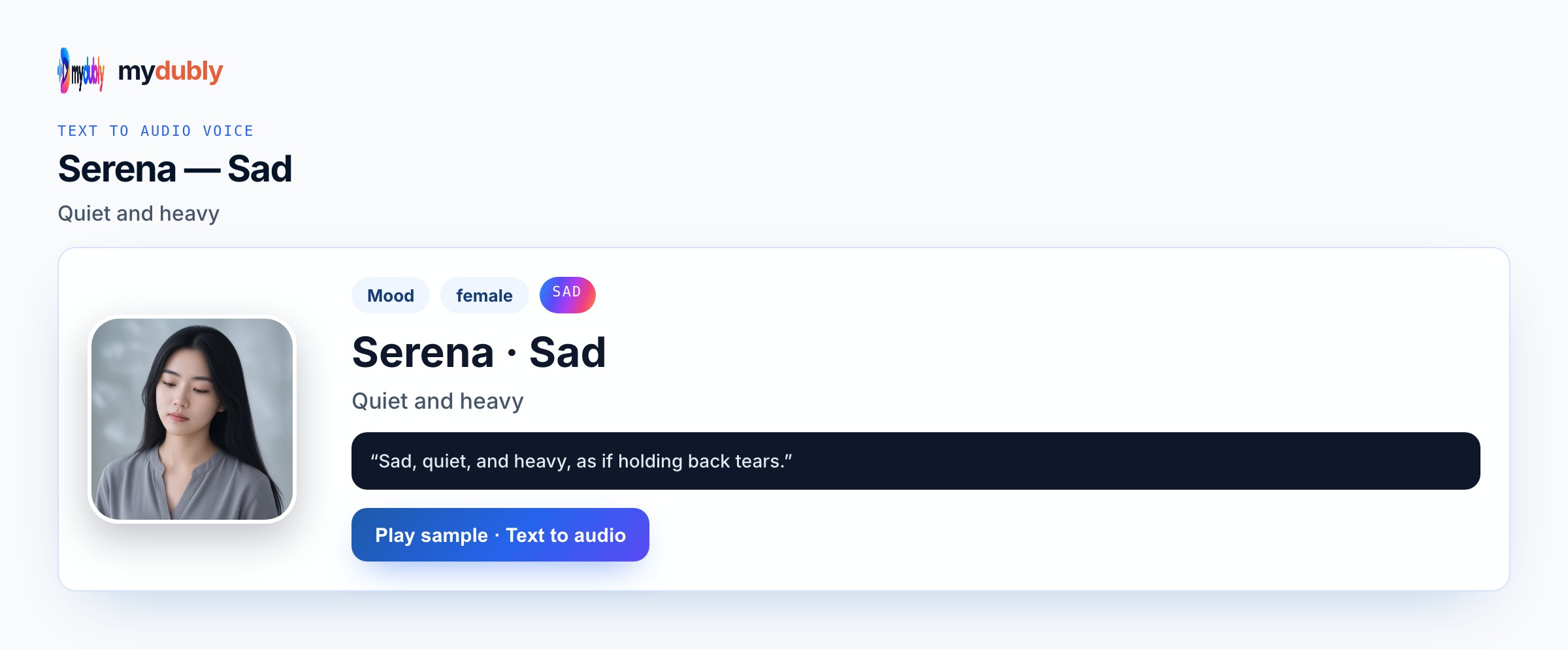
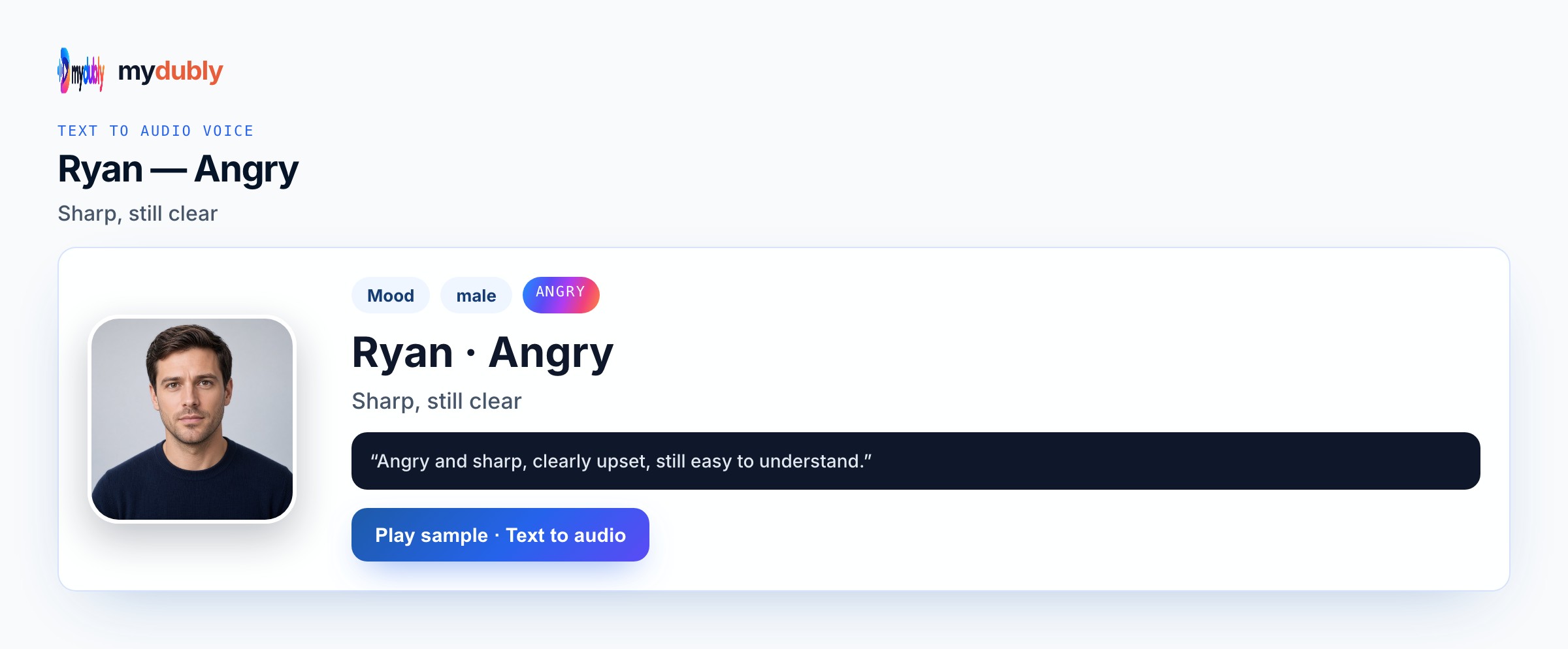
Expression comes from Mood and Studio presets plus the words. Sad for the discovery, Angry for the vow, Energetic for the rebuild montage call, Story for a reflective bridge. Same original character; different beats in Conversation mode even when only one gardener speaks. Do not stack every Mood on one sentence — split the emotional arc across lines so the trellis scene still reads cleanly. Write the performance into the words and the listed preset map; mydubly speaks what you paste with Studio or Mood voices, Conversation mode for casts, and an M4A download — not invented comedy engines or copyrighted character clones. mydubly speaks listed Studio and Mood voices (serena sad, ryan angry, aiden energetic) or a clone with permission — never a celebrity or copyrighted-character impersonation. You get M4A speech only: no lip-sync to picture, no music bed, no laugh track, and no invented comedy or robot filter beyond the preset you choose.
How a character voice stays distinct
Sad softens; Angry sharpens; Energetic drives the fix; Story remembers last season’s harvest. No underscore under the emotion. While previewing expressive animation voice AI, compare serena sad, ryan angry, aiden energetic on the same opening sentence and listen without reading along. Proper nouns, times, prices, and UI labels fail first — put them on dedicated short lines so a retake does not regenerate the whole scene. One Speak in language per job keeps endings clean; keep the same preset map the next time collaborators open this Expressive Animation Voice scene so roles stay recognisable by ear. Listen once on the device speakers your audience will use, then retake only broken names before you spend another job of dubbing credits. mydubly speaks listed Studio and Mood voices (serena sad, ryan angry, aiden energetic) or a clone with permission — never a celebrity or copyrighted-character impersonation.
Example dialogue
"The trellis split in the night storm." "I will not leave the vines on the ground." "Bring wire, bring stakes — we rebuild before noon."
Who casts this voice
Animators hitting key emotional shots — broken trellis, lost kite, burnt bakery tray — need Sad into Angry without recasting. Original character reels for thesis reviews show expressiveness across beats with Conversation mode. Story bridges between montage calls keep reflective lines from sounding like combat shouts. Indie shorts that cannot afford multiple VO sessions prototype the arc in M4A first. Workshop classes teaching “one character, many states” use preset changes as the lesson. Animators who need emotional reads on original character lines return to the same voice sheet when a pickup week arrives so the expressive animation voice AI take still matches last month's board.
Build the scene
Split the beats into lines, assign Sad / Angry / Energetic / Story as needed, generate, listen for overacting on short words, retake, download. After the first listen for expressive animation voice AI, rewrite only the lines that slipped, then speak those again instead of redoing clean takes. Confirm Speak in, assign voices (Conversation mode when needed), generate once, then download M4A into the folder that matches this job — animatic timeline, engine cue bank, podcast scratch, or rehearsal speaker. Batch useful runtime against the two-minute minimum; strip speaker labels from the spoken string if you do not want them heard. Keep the same preset map documented for the next episode or patch so Animators do not drift to a random Bright take by accident.
Casting mistakes to avoid
Stacking Sad, Angry, and Energetic into a single sentence muddies the arc. Expecting automatic crying or screaming beyond listed Moods invents a feature. Using Horror for ordinary sadness is usually wrong. Forgetting Conversation labels when one character changes state makes edits painful. Adding an underscore expectation from mydubly leaves the timeline silent. Regenerating the whole arc for one misread vine name wastes credits. Treating the download as a finished celebrity or IP performance invents a product path that is not offered. Skipping Conversation mode on multi-speaker scenes merges mouths and forces painful editor surgery later.
After you listen
Do not stack every Mood on one sentence — split the emotional arc across lines. Save Angry for the vow and Energetic for the rebuild call. If a short word overacts, rewrite it plainer and re-speak. Keep the gardener’s name consistent across beats so retakes stay easy to find. Preview a three-line slate before a long paste so the preset choice is locked early. If the take still feels wrong, change the wording or switch to another real preset — do not invent a hybrid Mood the catalogue does not list. After the first listen for expressive animation voice AI, rewrite soft or muddy clauses with shorter diction and keep serena sad, ryan angry, aiden energetic rather than stacking punctuation.
Using the tool on this page
- Paste the text. The language it is written in is read from the words. Set the language it should be spoken in. The same language speaks the words as written.
- Studio and Mood voices play a short sample in Chinese, English, French, German, Italian, Japanese, Korean, Portuguese, Russian and Spanish. Hindi, Arabic, Turkish, Polish, Dutch, Swedish, Norwegian, Finnish and Hebrew need a recording of 3 to 15 seconds from someone you have permission to copy. A longer sample keeps the first 12 seconds.
- The reading is priced like a video dub: 120 credits per minute (12¢), minimum 2 minutes per file. A short paragraph still meets the 2-minute minimum.
- When it finishes, the reading stays on this page. Edit the script and speak it again: that is a new reading of the whole script at the same dubbing price, including the 2-minute minimum. Download the audio. Files stay 120 minutes. A video dub is a different job and opens in the dub editor. More is on the text to audio dubbing tool page.
Frequently asked questions
Will the voice cry or shout automatically?
Mood presets colour delivery. Write intensity into the words too. There is no separate ‘crying’ or ‘screaming’ control beyond Angry, Sad, and similar listed voices.
Can one character use four presets in one file?
Yes in Conversation mode — one preset per beat line — as long as the emotional changes are clear.
Where do I open expressive animation voice?
On this page, or from the Text to Audio tab on the mydubly home page. The finished job opens in the text editor so you can change a line or a voice and speak the script again.
Is Whisper useful for expressive animation?
Yes for secrecy or close confession beats. Keep it short so intelligibility survives the mix.