The delivery you want
“Natural conversational” is Studio Bright, Clear, or Calm plus optional Conversation mode—not a promise of perfect human disfluencies or filler words the model invents. Paste how you want it said. Write contractions if you want them heard. Do not expect the voice to improvise banter you did not write. natural conversational TTS is a delivery-style choice among real presets — Low, Energetic, Calm, Story, Horror — not a pitch plugin, WPM slider, or trailer music pack. Paste lines that match the intent, preview the named voices, and download speech. Effects, score, and picture timing stay outside mydubly for natural conversational tts searches. A practical natural conversational tts workflow looks like this: decide whether the script truly wants Low weight, Energetic hype, soothing Calm/Bedtime/ASMR, conversational Bright, or cinematic Story/Horror, then paste lines short enough for that style to stay clear. Generate, hear whether the preset fights the wording, rewrite, and re-speak. Add EQ, score, or impacts only after download. There is no universal tempo percentage or bass plugin. Choosing the wrong family and hoping punctuation alone will fix natural conversational TTS is the expensive mistake.
What changes in the voice
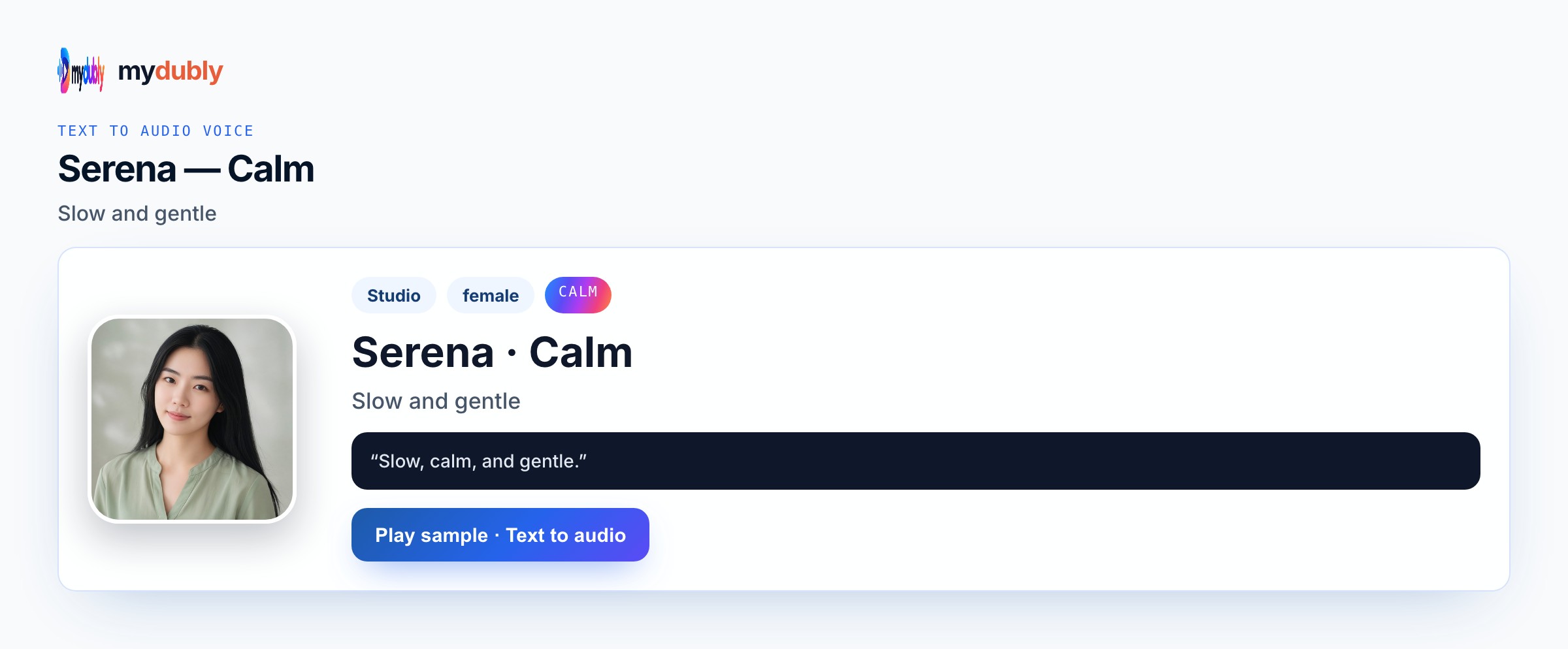
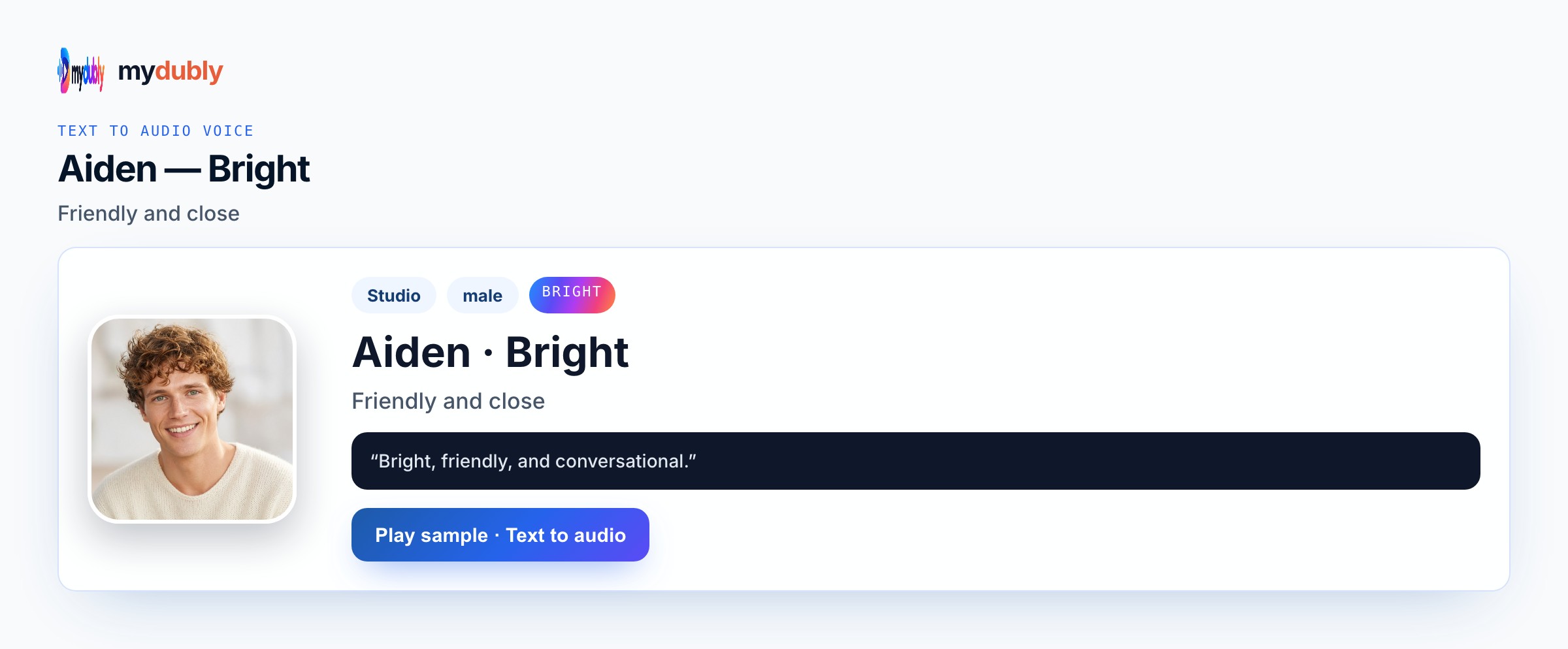
Aiden Bright for friendly talk. Ryan Clear when clarity still matters inside a chatty script. Serena Calm for softer conversation. Use Conversation mode when two people trade lines with different stock voices on the same timeline. On Natural Conversational TTS, match the style keyword to a real preset: Uncle Fu for deep serious, Energetic for hype, Calm/Bedtime/ASMR for soothing, Story/Horror for cinematic. There is no bass slider or chipmunk mode. Preview first. natural conversational TTS fails when you pick the opposite family and hope wording alone fixes it. Editors working on natural conversational tts should keep a simple checklist: Speak in correct, voice id locked, fragile tokens isolated, M4A named with the episode or Reel date, and a note of which lines were re-spoken after legal review.
Example lines
"Hey—thanks for being here today." "Quick context before we dig in." "I will keep this part short."
"Match the preset to the intent first."
"Short lines keep style intelligible."
"Effects stay in your editor after download."
Jobs that need this style
Natural conversational TTS serves podcasters and product teams who want talk-like delivery rather than stiff narration. Aiden Bright fits friendly talk; Clear when clarity still matters; Calm for softer conversation. Conversation mode assigns different stock voices when two hosts trade lines. Producers download M4A intros. Write contractions if you want them heard — the voice will not improvise banter you did not write. Dubbing credits apply. Natural Conversational TTS users who already locked picture still benefit from one M4A they can duck under B-roll, slides, or soft beds they own — Conversation mode only when a second speaker must contrast.
Choose the voice
Paste conversational copy, pick Bright or Clear, set Speak in, and generate. For two hosts, enable Conversation mode and assign voices per line. Retake stiff sentences by rewriting them shorter, then speak the script again. Download the M4A. Generate Natural Conversational TTS, confirm the style still matches after you hear it, rewrite lines that fight the preset, and download M4A. Add score or EQ in your DAW if needed. Do not expect percentage tempo controls. Keep natural conversational tts lines short enough that the chosen style stays intelligible. Name the downloaded file with the episode, Reel, or module id so collaborators can find the Natural Conversational TTS take later.
Style mistakes
Expecting automatic ums and laughs is false — write what you want heard. Leaving stage directions in the paste gets them spoken. Using News for chatty podcast intros undercuts talk feel. Celebrity host clones without permission fail. Music beds are not included. Running each host line as its own job when Conversation mode could batch them wastes credits. Inventing auto music beds, lip-sync, or platform auto-post for this job will disappoint — mydubly returns spoken audio you place yourself. Skipping a headphone scrub on names, numbers, and claims forces full re-speaks later when a single editor fix would have been enough.
After you listen
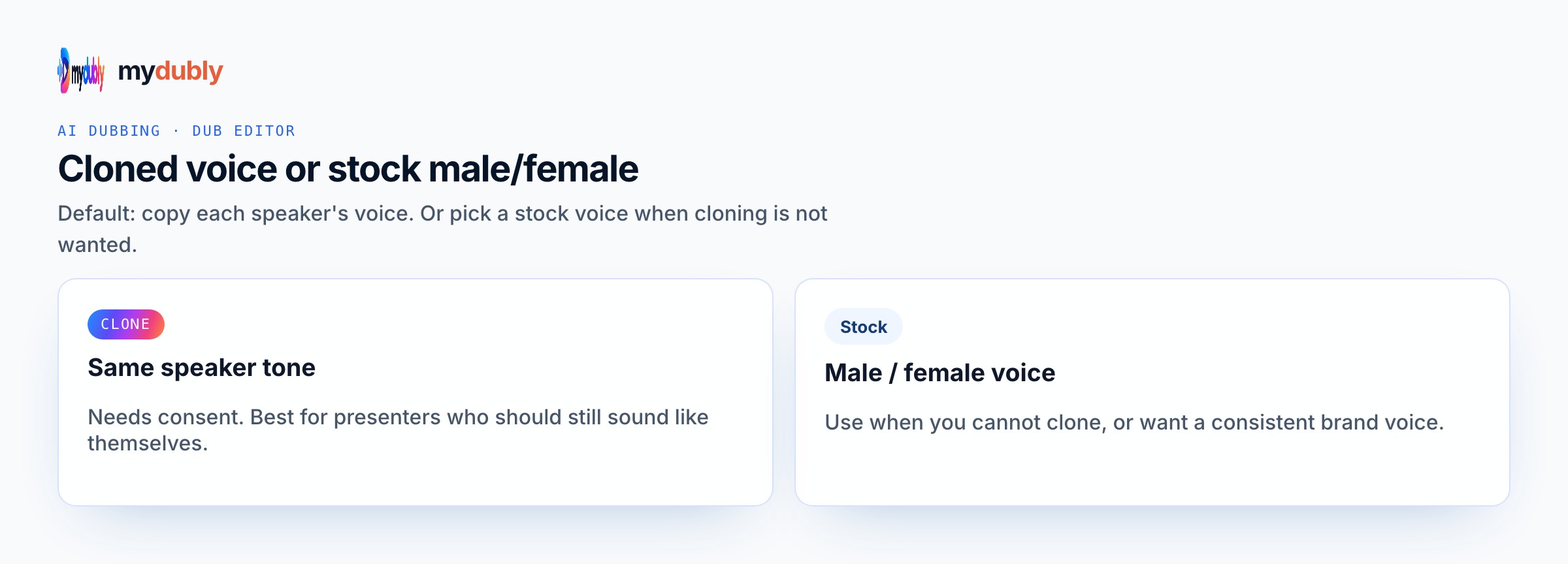
Avoid stage directions the voice might read aloud. Contractions read more naturally. Clone a real host only with permission and a quiet three-to-fifteen-second sample. For conversational TTS, write contractions and asides you want heard; the voice will not invent ums, laughs, or banter missing from the paste. When you publish natural conversational TTS audio, credit rules and acceptable-use still apply: original wording or cleared rights, no celebrity impersonation packs, and no claim that mydubly supplied music or lip-sync it did not generate.
Using the tool on this page
- Paste the text. The language it is written in is read from the words. Set the language it should be spoken in. The same language speaks the words as written.
- Studio and Mood voices play a short sample in Chinese, English, French, German, Italian, Japanese, Korean, Portuguese, Russian and Spanish. Hindi, Arabic, Turkish, Polish, Dutch, Swedish, Norwegian, Finnish and Hebrew need a recording of 3 to 15 seconds from someone you have permission to copy. A longer sample keeps the first 12 seconds.
- The reading is priced like a video dub: 120 credits per minute (12¢), minimum 2 minutes per file. A short paragraph still meets the 2-minute minimum.
- When it finishes, the reading stays on this page. Edit the script and speak it again: that is a new reading of the whole script at the same dubbing price, including the 2-minute minimum. Download the audio. Files stay 120 minutes. A video dub is a different job and opens in the dub editor. More is on the text to audio dubbing tool page.
Frequently asked questions
Will conversational TTS add ums and laughs automatically?
No. It speaks what you paste. Write the pauses and asides you want heard.
Where do I open natural conversational tts?
On this page, or from the Text to Audio tab on the mydubly home page. The finished job opens in the text editor so you can change a line or a voice and speak the script again.
What file do I get from Natural Conversational TTS?
An M4A speech file under dubbing credits, including the two-minute minimum on short pastes. Picture, music, captions, and posting stay in your own tools.