Why delivery matters here
Historical narration dies on wrong years and anglicised names. Paste a script you wrote. Verify facts yourself; the voice will not fact-check. No archival crackle or period music is added under the speech. historical story narration AI is narration of text you have rights to speak — not a rights clearance desk and not an audiobook mastering suite. Paste chapters or scenes, choose Story, Horror, Calm, or another real voice this page names, and download M4A. No orchestral bed, no page-turn SFX, and no illustrated pages come with the file for historical story narration jobs. A practical historical story narration workflow looks like this: paste only text you may legally speak, mark dialogue on separate lines if cast voices matter, generate with Story or the mood this page names, then listen end-to-end once on headphones. Fix names and the reveal before you share the M4A with a class, beta reader, or show timeline. Prefer scene or chapter pastes over whole-book dumps so retakes stay cheap against the two-minute minimum. Add music or ambience only in your editor. If your real need is translating a story you own into another language for bedtime, use bedtime-story spoken instead of stretching Mood delivery into a translator for historical story narration AI.
Pacing and tone
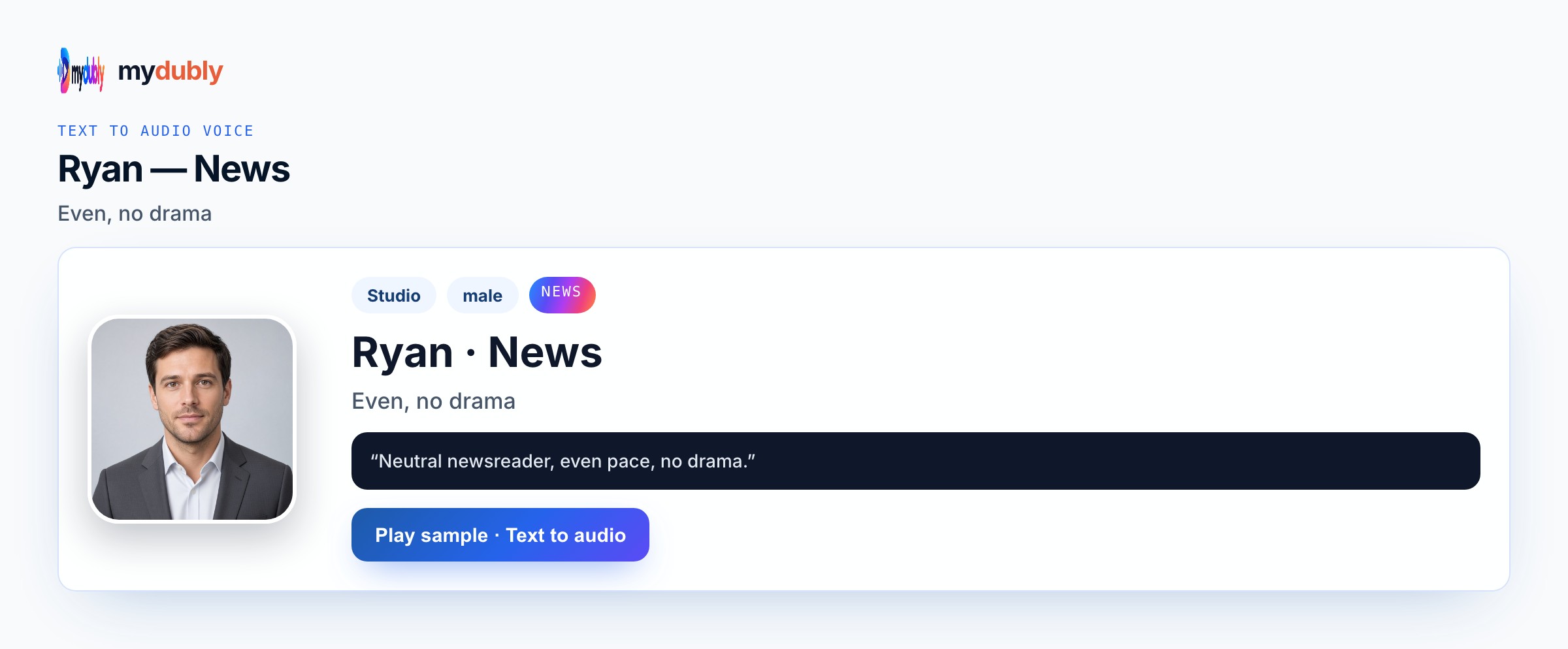
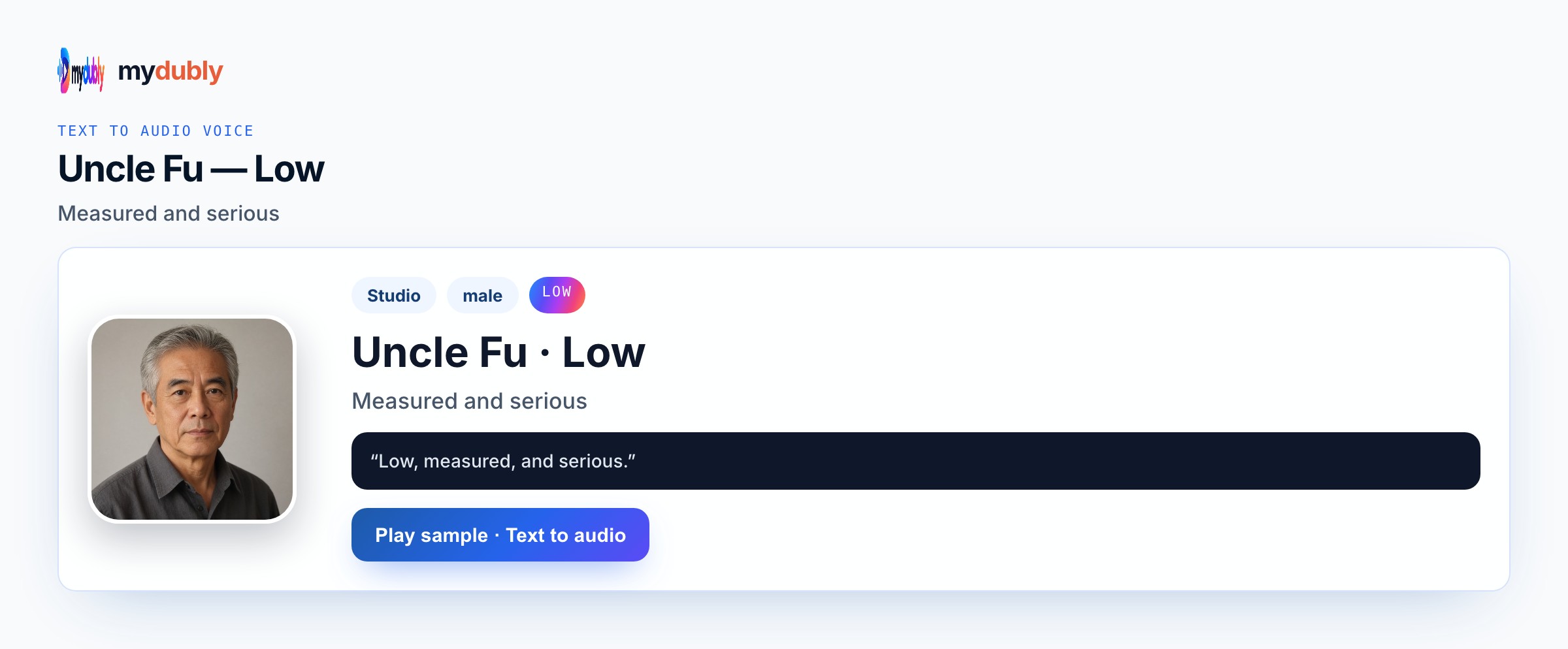
Ryan News for documentary history. Uncle Fu for older, measured storytelling. Ryan Story when the piece is narrative nonfiction with scene work. Speak in must match a supported language for the chosen voice. On Historical Story Narration AI, Ryan Story usually carries paced prose; Horror and Whisper darken dread; Calm and Bedtime soften; Uncle Fu adds measured weight. Put fragile names on their own lines. Conversation mode assigns cast lines without changing the narrator’s identity. Styled Speak in only. historical story narration AI should feel like a tell, not a news bulletin, unless News is the honest pick.
Sample narration
"In nineteen ten the night shift walked out before dawn." "The ledger still listed three names in the margin." "Visitors stop here at the photograph of the closed gate."
"Leave the reveal on its own line."
"Check every proper name twice."
"Rights stay with the writer who pastes."
Listeners this suits
Historical story narration AI serves teachers and museum educators who wrote a historical narrative to speak. Ryan News fits documentary history; Uncle Fu measured storytelling; Story fits narrative nonfiction with scene work. Educators prepare gallery handset M4A with exact dates. Classroom teachers narrate strike or harbour stories without theatrical accents. Download speech for players — period effects stay in your editor if you want them. Styled Speak in must match a supported language for the chosen voice. Historical Story Narration AI users who already locked picture still benefit from one M4A they can duck under B-roll, slides, or soft beds they own — Conversation mode only when a second speaker must contrast.
Record the story
Paste the gallery script, pick News, Low, or Story, set Speak in, and generate. Scrub every date and proper noun. Fix failures and speak the script again. Download the M4A for the handset. Generate Historical Story Narration AI, scrub proper nouns and the reveal line, rewrite failures, speak again, and download M4A for headphones or a show timeline. Chapter-sized pastes retake cleaner than whole novels. Do not expect ACX mastering or music beds. Rights to the wording stay with you on historical story narration work.
Narration mistakes
Expecting old-time audio filters or crackle in the file is false. Trusting the voice to fact-check years is dangerous — verify first. Using Energetic for solemn memorial VO undercuts gravity. Pasting locked textbook chapters without permission fails. Confusing this with myth page jobs is a different angle. Splitting every date into its own paid job wastes the minimum. Inventing auto music beds, lip-sync, or platform auto-post for this job will disappoint — mydubly returns spoken audio you place yourself. Skipping a headphone scrub on names, numbers, and claims forces full re-speaks later when a single editor fix would have been enough.
After you listen
Write years in words if digits keep drifting. Keep object accession numbers on their own line. This is delivery style, not a research assistant. For historical story narration AI, write emotion and structure into the wording, then let a real Studio or Mood preset carry delivery. Avoid invented celebrity, romantic, sarcastic, or robot filters the product does not ship. Re-speak after legal or factual edits. Keep a note of the voice id you locked for the series so collaborators do not rotate moods by accident.
Using the tool on this page
- Paste the text. The language it is written in is read from the words. Set the language it should be spoken in. The same language speaks the words as written.
- Studio and Mood voices play a short sample in Chinese, English, French, German, Italian, Japanese, Korean, Portuguese, Russian and Spanish. Hindi, Arabic, Turkish, Polish, Dutch, Swedish, Norwegian, Finnish and Hebrew need a recording of 3 to 15 seconds from someone you have permission to copy. A longer sample keeps the first 12 seconds.
- The reading is priced like a video dub: 120 credits per minute (12¢), minimum 2 minutes per file. A short paragraph still meets the 2-minute minimum.
- When it finishes, the reading stays on this page. Edit the script and speak it again: that is a new reading of the whole script at the same dubbing price, including the 2-minute minimum. Download the audio. Files stay 120 minutes. A video dub is a different job and opens in the dub editor. More is on the text to audio dubbing tool page.
Frequently asked questions
Does the historical voice add old-time audio filters?
No. You hear a modern Studio or Mood reading of your text. Period effects stay in your editor if you want them.
Where do I open historical story narration ai?
On this page, or from the Text to Audio tab on the mydubly home page. The finished job opens in the text editor so you can change a line or a voice and speak the script again.
What file do I get from Historical Story Narration AI?
An M4A speech file under dubbing credits, including the two-minute minimum on short pastes. Picture, music, captions, and posting stay in your own tools.