The character on the page
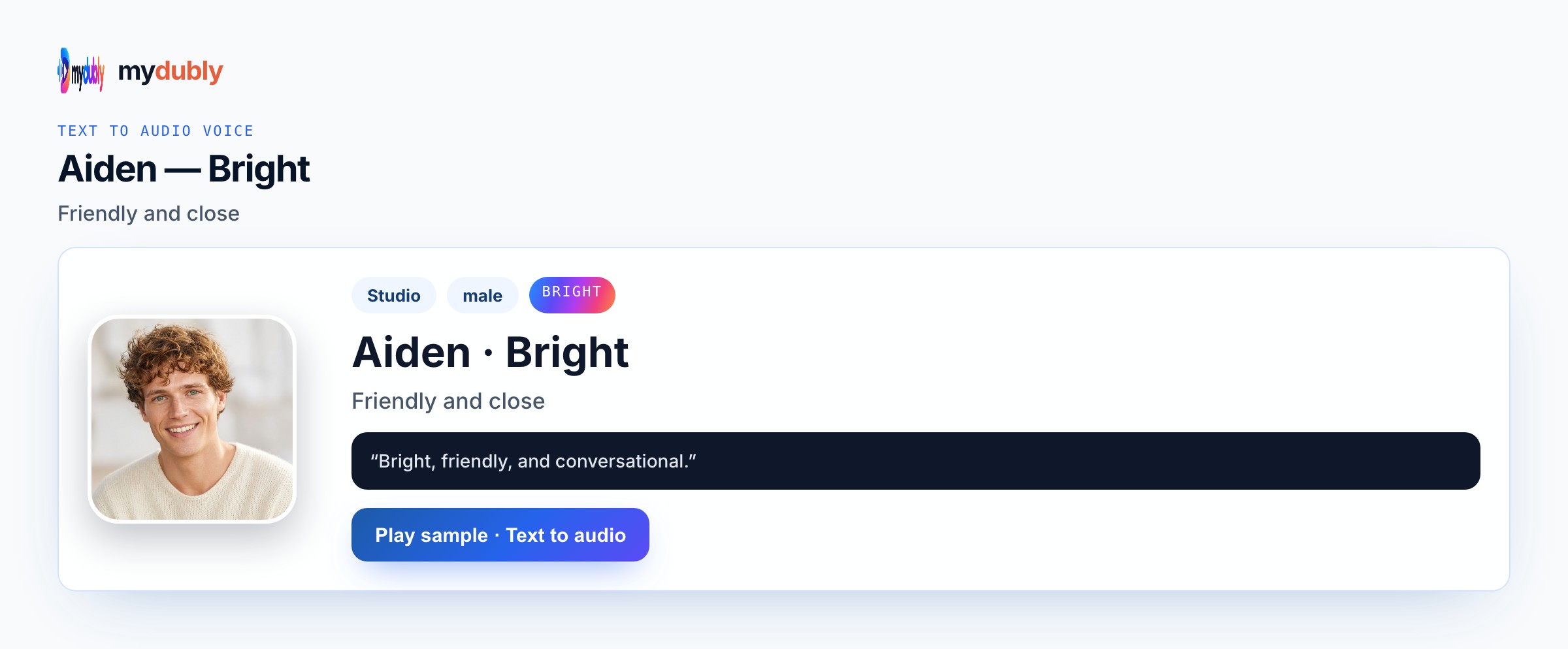
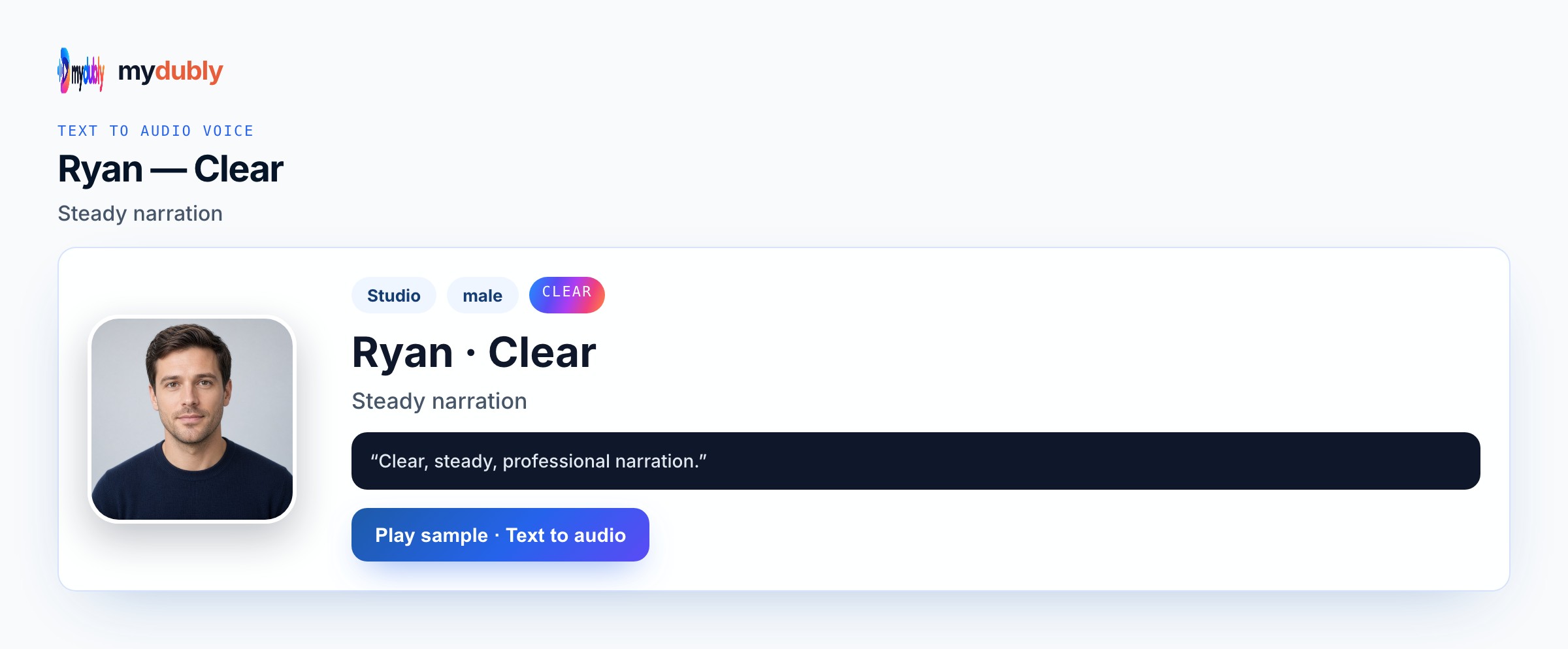
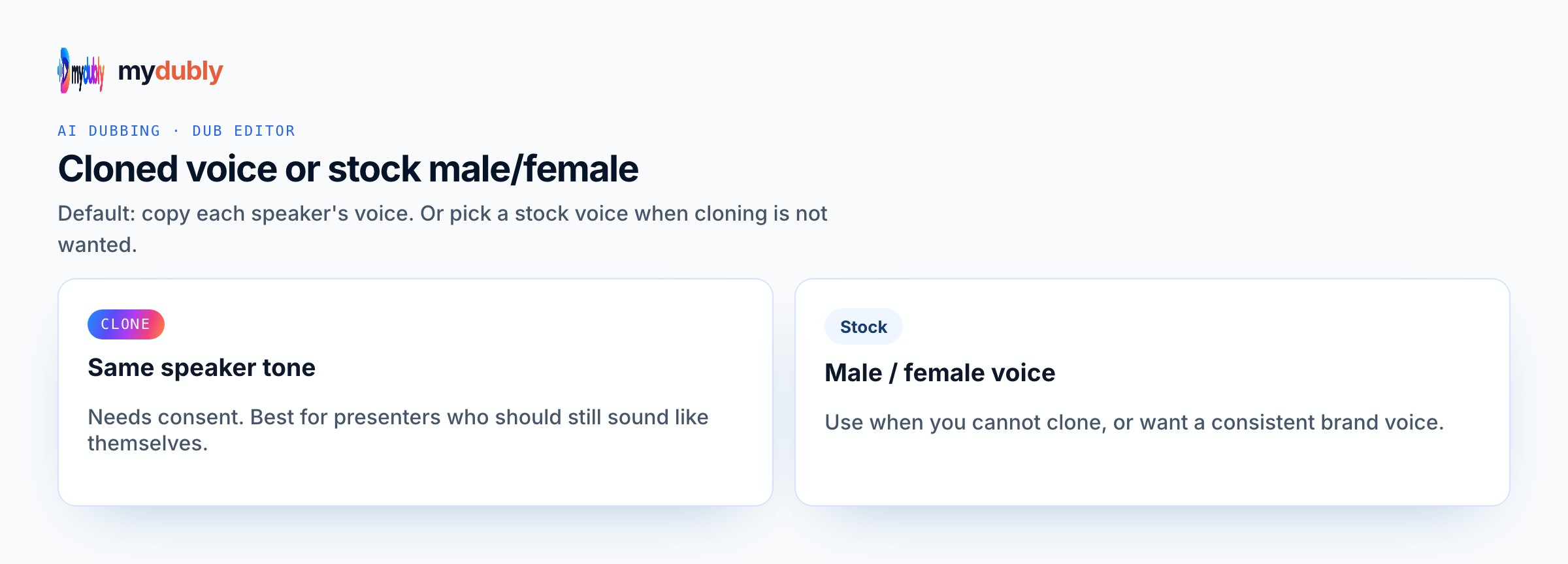
Casting is comparison, not magic. Run the same line on Clear, Low, Story, and Bright as separate short jobs or alternate Conversation assignments. Pick one and write it into the bible. Clone only enters if you have a permitted actor sample. Teams burn credits when they paste five conflicting tones in one block — lock the delivery for this keyword first, then run a second job if the scene truly shifts. Teams who search character voice casting AI usually arrive with a draft already written — A Friday casting pass compares three presets on the same detective intro line before the team locks a voice for the season bible. That situation is exactly when Ryan Clear, Uncle Fu, or Ryan Story should be previewed on one sentence before a full paste, because the wrong family wastes the two-minute dubbing-credit minimum. Directors and narrative leads choosing a locked voice per role also care about practical shipping: Speak in must match the language of the text, Conversation mode only when another speaker needs a different listed preset, and the download stays M4A speech without a music bed or lip-sync picture. If a proper noun slips, isolate it on its own line in the text editor and re-speak that beat instead of regenerating the entire scene. Keep original characters only; descriptions guide which catalogue voice you
How a character voice stays distinct
Clear for procedural cool; Low for older gravity; Story for noir reflection; Bright for a warmer detective. No music stings between takes — rename your downloads yourself. Proper nouns fail first under heat or hush — spell them the way you need them said. While previewing character voice casting AI, compare Ryan Clear, Uncle Fu, or Ryan Story on the same opening sentence from your paste and listen without reading along. Proper nouns, times and UI labels fail first — put them on dedicated lines. One Speak in language per job keeps endings clean. Keep the same preset map the next time you open this scene so collaborators recognise the role by ear. Listen once on the device speakers your audience will use, then retake only the broken names. Write the stakes into concrete nouns before you spend another job of dubbing credits.
Example dialogue
"I do not chase ghosts — I chase receipts." "If the alibi holds, we close the file." "If it cracks, we start before dawn."
Who casts this voice
Who ships this take? Directors and narrative leads choosing a locked voice per role. Why now? Because a Friday casting pass compares three presets on the same detective intro line before the team locks a voice for the season bible. The product path is Ryan Clear, Uncle Fu, or Ryan Story plus wording that already names stakes, places and people. When two speakers argue or advise, Conversation mode keeps presets separate. Credits match video dubbing; short pastes still meet the two-minute minimum, so paste a useful scene. Original characters only — no franchise impersonation.
Build the scene
Paste the casting lines, generate once per candidate preset, listen side by side, lock a choice, then cast the full scene in Conversation mode with that map. After the first listen, rewrite only the lines that slipped, then generate those again instead of redoing the whole scene when the rest already works. Confirm Speak in, assign voices (Conversation mode when needed), generate once, then retake only broken lines. Download M4A for the folder that matches this character voice casting AI job — podcast timeline, LMS, cutscene bank or rehearsal speaker. Keep the same preset map the next time you open this scene so collaborators recognise the role by ear. Listen once on the device speakers your audience will use, then retake only the broken names. Write the stakes into concrete nouns before you spend another job of dubbing credits. Keep the same preset map the next time you open this scene so collaborators recognise the role by ear.
Casting mistakes to avoid
The character voice casting AI take fails when teams ignore the situation in the lede — A Friday casting pass compares three presets on the same detective intro line before the team locks a voice for the season bible. — and paste into the wrong family. One preset for every role collapses contrast that Ryan Clear, Uncle Fu, or Ryan Story was meant to protect. Character-sheet adjectives do not invent a new timbre — pick listed voices or a permitted clone. Bracketed stage directions become audible words. Regenerating the same unbroken line against the two-minute dubbing minimum without rewriting wastes credits. Bilingual mashups in one job smear proper nouns that Directors needed clear.
After you listen
Keep a spreadsheet: role, voice id, sample line, date locked. Isolate stubborn names, numbers and product tokens on their own lines, then re-speak only the broken beat in the text editor. After the first listen for character voice casting AI, rewrite soft or muddy clauses with shorter diction and keep Ryan Clear, Uncle Fu, or Ryan Story rather than stacking punctuation. A Friday casting pass compares three presets on the same detective intro line before the team locks a voice for the season bible. is the ear test — if that situation still sounds wrong, you picked the wrong preset family or left stage directions in the paste. Batch useful runtime against the two-minute minimum, strip labels you do not want spoken, and document the voice map for the next episode. Clone remains permission-based; stock casting stays inside Studio and Mood catalogues.
Using the tool on this page
- Paste the text. The language it is written in is read from the words. Set the language it should be spoken in. The same language speaks the words as written.
- Studio and Mood voices play a short sample in Chinese, English, French, German, Italian, Japanese, Korean, Portuguese, Russian and Spanish. Hindi, Arabic, Turkish, Polish, Dutch, Swedish, Norwegian, Finnish and Hebrew need a recording of 3 to 15 seconds from someone you have permission to copy. A longer sample keeps the first 12 seconds.
- The reading is priced like a video dub: 120 credits per minute (12¢), minimum 2 minutes per file. A short paragraph still meets the 2-minute minimum.
- When it finishes, the reading stays on this page. Edit the script and speak it again: that is a new reading of the whole script at the same dubbing price, including the 2-minute minimum. Download the audio. Files stay 120 minutes. A video dub is a different job and opens in the dub editor. More is on the text to audio dubbing tool page.
Frequently asked questions
Will the AI recommend the best voice for my character?
No automated casting recommender. You compare listed presets (or permitted clones) and choose.
Can I cast copyrighted characters?
No. Cast original characters only. Do not request impersonations of protected cast voices.
Where do I open character voice casting ai?
On this page, or from the Text to Audio tab on the mydubly home page. The finished job opens in the text editor so you can change a line or a voice and speak the script again.