The situation
Kanji names have more than one reading. If the voice picks the wrong one, rewrite the line with the reading you want, in kana, and re-speak it. Spaces are not how Japanese sentences are divided, so paste normal sentences rather than one word per line unless you want a list.
The reading
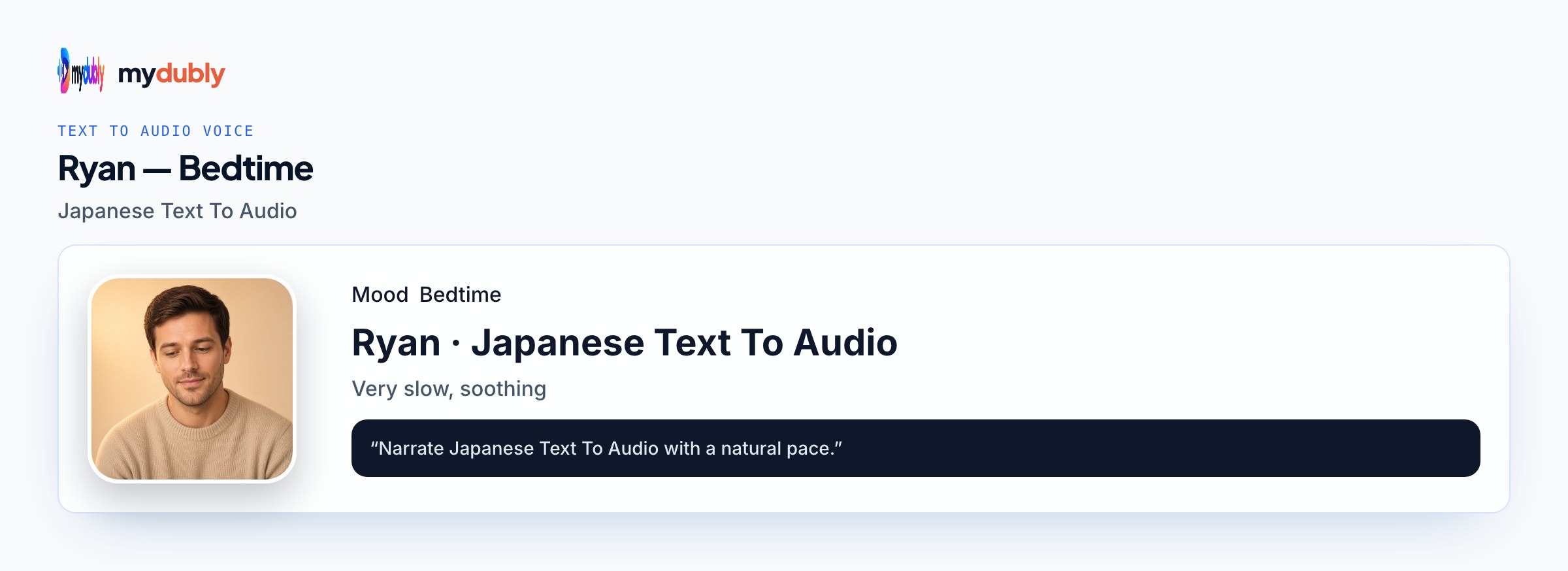
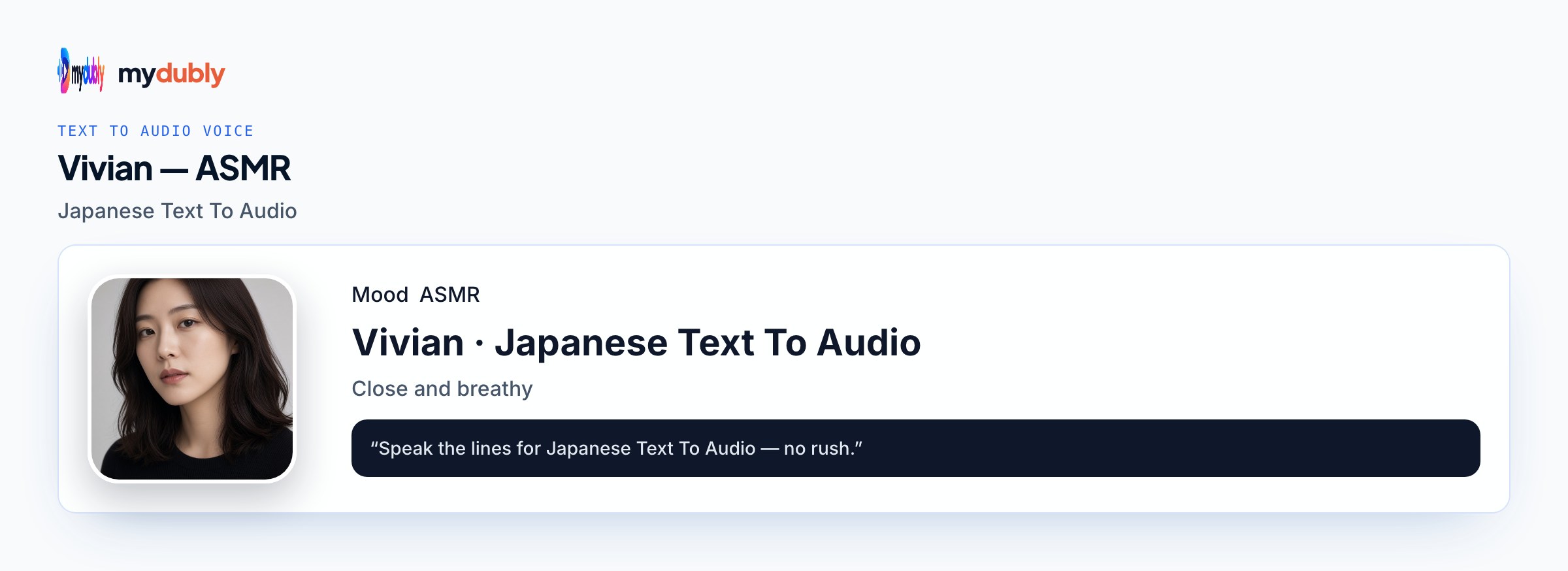
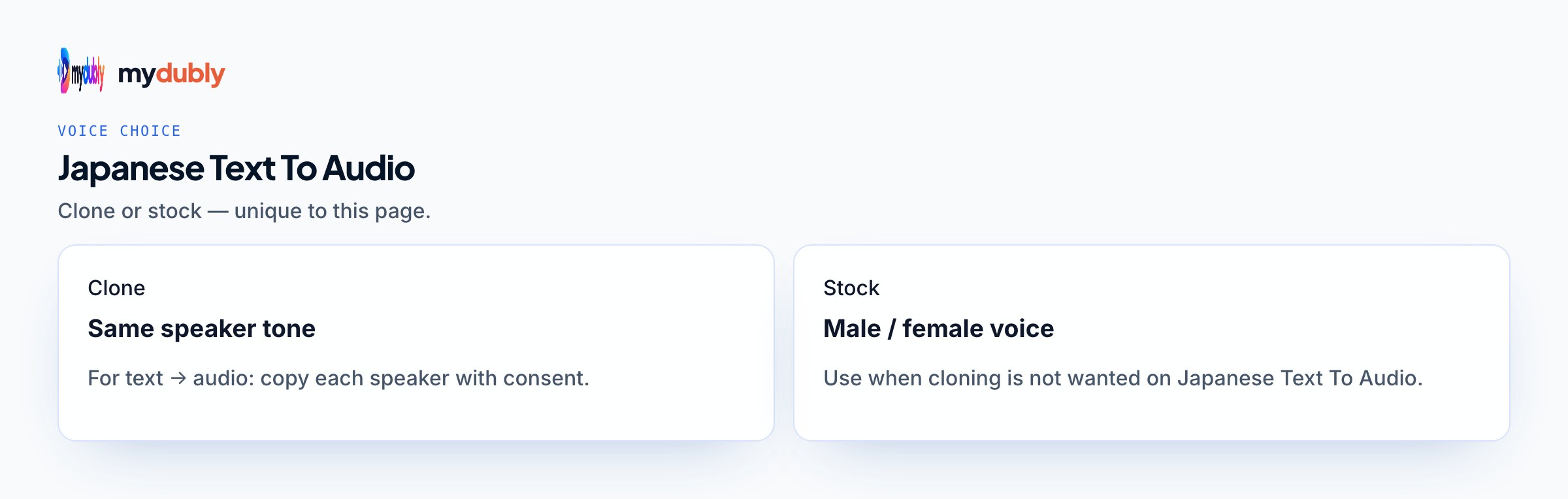
Set Speak in to Japanese when the script should be spoken as written. The written language is read from the text. Preview a Studio or Mood voice. Clone is a short sample of one person with permission, not a clip of the shop's background music.
What to correct
The name line is the one to open in the editor. Rewrite it and speak the script again. Download the M4A for the speaker.
Using the tool on this page
- Paste the text. The language it is written in is read from the words. Set the language it should be spoken in. The same language speaks the words as written.
- Studio and Mood voices play a short sample in Chinese, English, French, German, Italian, Japanese, Korean, Portuguese, Russian and Spanish. Hindi, Arabic, Turkish, Polish, Dutch, Swedish, Norwegian, Finnish and Hebrew need a recording of 3 to 15 seconds from someone you have permission to copy. A longer sample keeps the first 12 seconds.
- The reading is priced like a video dub: 50 credits per minute (5¢), minimum 2 minutes per file. A short paragraph still meets the 2-minute minimum.
- When it finishes, the reading stays on this page. Edit the script and speak it again: that is a new reading of the whole script at the same dubbing price, including the 2-minute minimum. Download the audio. Files stay 120 minutes. A video dub is a different job and opens in the dub editor. More is on the text to audio translator page.
Frequently asked questions
Can I keep a Japanese script from being translated?
Yes. Set Speak in to Japanese. The written language is read from the text, so the script is spoken as pasted, apart from lines you later rewrite.
Where do I open japanese text to audio?
On this page, or from the Text to Audio tab on the mydubly home page. The same job appears under My files and opens in this text editor when the audio is ready. Edit the script and speak it again from here. A video dub uses the dub editor.